Return-to-Sport Testing and Training
"It feels fine" isn't a clearance standard. Before you go back, we test strength and movement quality, then train whatever falls short.
Objective Testing
Measured strength and movement testing, so the decision to return is based on data, not a feeling.
Close the Gaps
Targeted training for whatever falls short, then we re-test until you pass.
ACL & Beyond
For athletes coming back from ACL reconstruction and other major injuries.
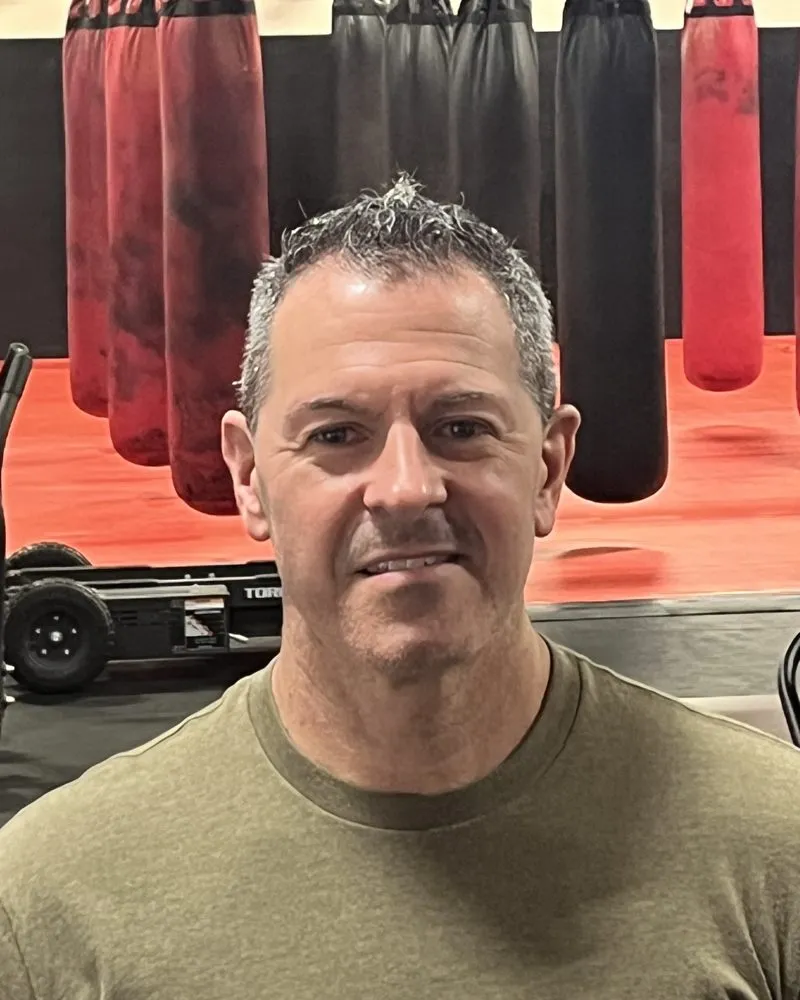
Meet Lou Campasano, PT, ATC
I started as an athletic trainer in 1999 and became a licensed physical therapist in 2002. For more than 20 years I've treated orthopedic and sports injuries, from post-op knees and shoulders to athletes working their way back to the field, the mat, or the court. I opened Bespoke because the insurance-driven model doesn't leave time to do this job right. Here, every session is one-on-one with me. I assess how you move, not just where it hurts, and build the plan around what you need to get back to.
Assess First
SFMA and FMS testing show the movement problem behind the symptom.
Treat Hands-On
Dry needling, manual therapy, and targeted loading, chosen for your case.
Progress with Purpose
Measurable goals at every phase, ending with a full return to your sport or activity.
Return-to-Sport Testing in Greenville, SC
Getting cleared to play and being ready to play are not the same thing. Many athletes go back once the pain is gone and the calendar says it's been long enough, while strength and control on the injured side still lag behind. Return-to-sport testing at Bespoke measures where you actually are, so the decision to go back is based on numbers, not a feeling.
Testing and training are run by Lou Campasano, a certified athletic trainer since 1999 and licensed physical therapist since 2002, who has spent more than 20 years getting athletes back to the field, the mat, and the court.
Who it's for
- Athletes coming back from ACL reconstruction or other knee surgery
- Ankle, hip, and shoulder injuries where the athlete wants to know they're ready
- High school and college athletes heading into a new season after an injury
- Combat athletes and lifters returning to full training
- Athletes who finished rehab elsewhere and want an objective check before going back
How it works
1. Test. We measure strength, power, and movement quality and compare the injured side to the healthy side. Movement screening (FMS and SFMA) shows how you move under load, not just whether it hurts.
2. Close the gaps. Anything that falls short becomes the focus of a targeted training plan, in the clinic and in an online program you follow between visits.
3. Re-test. We test again until you meet the standard, then build the bridge back to full practice and competition.
Initial evaluation: $250 · Follow-up visits: $200 (about 1 hour, one-on-one)
Packages: 6 weeks $1,175 · 8 weeks $1,450 · 12 weeks $2,050
Online programming between visits: $200/month. Superbills provided for possible out-of-network reimbursement.
Return-to-sport FAQs
My surgeon cleared me. Why test?
Surgical clearance usually means the repair has healed. It doesn't measure whether your strength and control are ready for cutting, jumping, or contact. Testing shows what's left to work on before you take on full sport demands.
Can you test me if I did my rehab somewhere else?
Yes. Many athletes come in just for testing and a plan to close the remaining gaps.
How long does it take?
The first test happens at your evaluation. How long it takes to pass depends on how far off you are; some athletes need a few weeks, others longer after major surgery.
Do you work with youth athletes?
Yes, including high school athletes. A parent or guardian is involved in the plan.
Want to know whether you're ready? Start with a free call.
Book a Free 15-Min Discovery CallPricing & Packages
Transparent, cash-based pricing. Superbills provided for possible out-of-network reimbursement.
New Client Offer
Initial evaluation and treatment, a 6-week online exercise program updated weekly, and a 15-minute check-in call each week: $800
6 Weeks
- Initial evaluation and treatment
- 5 one-hour visits
- Online exercise program upgrades
8 Weeks
- Initial evaluation and treatment
- 7 one-hour visits
- Online exercise program upgrades
12 Weeks
- Initial evaluation and treatment
- 11 one-hour visits
- Online exercise program upgrades
Individual Services
| Initial Evaluation | $250 |
| Follow-up Treatment | $200 |
| Functional Movement Screen | $90 |
| FMS with initial corrective exercises | $125 |
| Manual Treatment + Dry Needling (45 min) | $125 |
| Dry Needling (without e-stim) | $50 |
| Dry Needling with e-stim (30 min) | $75 |
| Online Exercise Programming (weekly updates) | $200/month |
Discounts available for partner gym members.
Book a Free 15-Min Discovery CallVisit Us
Email: [email protected]
Address: X-Zen Sports, 2435 E North St, Unit 1101, Greenville, SC 29615
Get In Touch
Hours: Mon–Thu 7:30am–6pm, Fri 8am–4pm
Phone: (864) 920-0696
